A licence applies within the rules of its issuing jurisdiction and does not, by itself, place a casino under UK Gambling Commission oversight.
What a Casino Licence Does—and Does Not—Establish
A casino licence is a form of regulatory authorisation. It identifies a body that has permitted an operator to provide gambling services within the scope of that body’s rules. The word “licensed”, on its own, therefore answers only a limited question: whether an operator has an authorisation from a named licensing authority. It does not establish that the operator is authorised in every country where its website can be reached.
That distinction matters when a casino is described as licensed online. A licence issued outside the United Kingdom may be relevant to the operator’s status in the issuing jurisdiction, but it is not a UK casino licence and does not bring the site under the UK Gambling Commission’s oversight. Non-UK-regulated casinos are online gambling sites that operate without that Commission’s oversight. They may hold authorisations from jurisdictions such as Malta, Curaçao, Gibraltar or Anjouan; the fact that an authorisation exists does not make those arrangements equivalent to a UK licence.
A licence should consequently be read as a jurisdiction-specific statement, not as a general certificate of quality. Its significance depends on who issued it, which operator or company it covers, and what activities it authorises. The description “licensed casino” is incomplete if it does not identify the licensing authority. Nor does the word alone show whether an authorisation applies to the particular website, the relevant company, or the services being offered.
The same caution applies to broader claims about reliability. A licence does not, merely by existing, establish that every payment will be processed promptly, that every dispute will be resolved in a particular way, or that all terms will be favourable to a player. Those questions concern an operator’s conduct and the rules that apply to it. The licence may provide a framework for supervision, but the label itself cannot stand in for evidence about the framework’s scope or how it operates.
Non-Gamban casinos in the UK: what exclusion means
This is also why “licensed” and “safe” are not interchangeable descriptions. A licensing authority’s permission is a regulatory fact; safety is a wider judgement that would require information about matters such as complaint handling, financial arrangements and player protections. A licence label does not answer those questions by itself. For a non-UK-regulated casino, safeguards may be less stringent than those required of UKGC-licensed operators. Players using such sites do not have access to the UK’s Financial Ombudsman Service or the mandatory responsible-gambling tools associated with UK regulation. The precise position depends on the operator and the rules that govern it, so a foreign authorisation should not be treated as proof that equivalent protections apply.
The term “online casino licence UK” can refer to two different things in ordinary usage: an authorisation issued by a UK regulator, or a licence held by a casino that is available to someone in the United Kingdom. Those are not the same. The ability to open a site does not show that it has the relevant domestic authorisation. Conversely, a licence from another jurisdiction does not become a UK licence because the site is accessible from Britain.
A further distinction is needed between a company’s location and the regulatory status of its service. A casino may be operated from outside the UK and hold a foreign licence, but those facts alone do not tell whether it is within UKGC oversight. The relevant issue is not simply where the business is based or what appears in a website footer; it is which regulator’s authority applies to the gambling service in question. Where the UK Gambling Commission is not overseeing the site, the protections and routes available through that regulator should not be assumed.
The wording used in a promotion can blur these distinctions. “Licensed online casino” may be accurate in the narrow sense that some authority has issued a licence, yet leave out the information needed to understand what that licence covers. “New licensed online casino” adds little about regulatory standing: newness describes the site or its market presence, not the strength or geographic reach of its authorisation. Neither phrase establishes that a casino is authorised to serve customers in Great Britain.
Do
- Identify the specific licensing authority
- Check the jurisdiction and activities covered
- Verify available player protections
Don’t
- Treat “licensed” as a general quality certificate
- Assume a foreign licence equals UKGC oversight
- Use “safe” and “licensed” interchangeably
A sound reading of licence claims therefore separates three ideas: the existence of an authorisation, the jurisdiction and activities it covers, and the practical protections available to players. These should not be collapsed into one promise. The first is a question of status; the second concerns the licence’s scope; the third depends on the applicable rules and their enforcement. A foreign licence can be relevant evidence about an operator, but it is not a substitute for UKGC oversight and cannot by itself establish that a casino offers protections equivalent to those of a UK-regulated service.
Accordingly, the phrase “casino licence” has meaning only with its context attached. Identifying the issuing authority and the limits of its remit is more informative than relying on a generic claim of being licensed. Without that distinction, a licence label can sound broader than the regulatory status it actually describes.
How Licensing in Malta and Other Jurisdictions Fits Together
A non-UK-regulated casino may hold authorisation from a jurisdiction such as Malta, Curaçao, Gibraltar or Anjouan. These names identify separate licensing jurisdictions; they are not alternative names for one shared regulator or one common licence. A Malta-licensed online casino and a casino licensed elsewhere therefore need to be considered under their respective licensing arrangements, rather than treated as equivalent because both hold a non-UK licence.
The distinction matters because the jurisdiction named on a licence identifies the regulatory framework being claimed. It does not, by itself, establish that a casino holds permission from every regulator whose market it serves. Nor does the word “licensed” alone show what checks apply to the operator, what obligations it has, or what route exists for resolving a dispute. Those conclusions require information about the specific authority and the particular licence, not just the general category of a foreign-licensed site.
Casino Without a Swedish Licence: UK Guide
Malta, Curaçao, Gibraltar and Anjouan may all appear in descriptions of non-UK-regulated casinos, but their inclusion in the same list does not establish that their requirements are the same. A licence issued in one jurisdiction cannot be assumed to carry the safeguards or permissions associated with another. The available description of a casino as “licensed” is therefore incomplete unless it identifies the licensing jurisdiction and the operator to which the authorisation applies.
This also limits what can be inferred from a Malta-licensed label. It indicates a claimed connection to Malta’s licensing system; it is not a general quality rating and does not, on its own, confirm that the site is authorised in the UK. The same distinction applies to casinos licensed in Curaçao, Gibraltar or Anjouan. A foreign licence should not be read as a UK Gambling Commission licence simply because the casino is accessible online or accepts customers in Britain.
Comparisons between jurisdictions should consequently begin with the scope of each claim, not with a ranking of names. A licence statement may identify an authority, but further questions remain: which operating company is named, which site the authorisation covers, and whether the authorisation is current. These are basic matters of identification. They do not establish that the licensing systems provide equal oversight or that a particular operator complies with its obligations.
Malta
A separate licensing jurisdiction with its own specific regulatory framework.
Curaçao
An offshore jurisdiction whose licences are distinct from those of Malta or the UK.
Gibraltar
A specific licensing authority that does not share requirements with other jurisdictions.
Anjouan
A jurisdiction whose authorisations are not equivalent to a UK licence.
The phrase “how to check if an online casino is licensed” can also refer to different checks. Confirming that an operator claims a licence from a named jurisdiction is not the same as confirming UK authorisation. The jurisdiction and regulator must be read precisely: a Malta licence, for instance, should not be described as a UK licence. Where the claim is about permission to serve the British market, the relevant question is whether the operator holds the required UK authorisation, not whether it holds some licence elsewhere.
The number of jurisdictions mentioned in descriptions of non-UK-regulated casinos should not be mistaken for a count of licensed operators. A list of places where licences may be issued says nothing about how many online casinos hold licences in each place, or how many are authorised to serve a particular market. Likewise, there is no single “safe licensed online casino” conclusion that follows from a jurisdiction name alone. Licensing is one piece of information; it cannot substitute for identifying the operator and the scope of its authorisation.
The practical distinction is between a licence’s origin and the permissions relevant to a particular market. Malta, Curaçao, Gibraltar and Anjouan are separate jurisdictional references, not interchangeable assurances. Any comparison that treats them as one uniform category risks obscuring the very information the licence label is meant to convey.
What “Best Licensed Casino” Can Mean Without a UK Licence
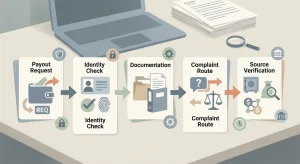
For a UK reader considering a casino with a non-UK licence, the payout timeframe is one practical detail to check. These short verdicts note what is known about each listed operator.
1. NightLuck
Payout speed: 1-3 business days NightLuck lists a payout speed of 1–3 business days.
2. Jetsetspins
Payout speed: 1-3 business days Jetsetspins lists a payout speed of 1–3 business days.
3. SpinFormula
Payout speed: 1-3 business days SpinFormula lists a payout speed of 1–3 business days.
4. Revery Play
Payout speed: 1-3 business days Revery Play lists a payout speed of 1–3 business days.
5. WinBeast
Payout speed: 1-3 business days WinBeast lists a payout speed of 1–3 business days.
6. x3bet
Payout speed: 1-3 business days x3bet lists a payout speed of 1–3 business days.
7. SlotoSport
Payout speed: 1-3 business days SlotoSport lists a payout speed of 1–3 business days.
8. BeOnBet
Payout speed: 1-3 business days BeOnBet lists a payout speed of 1–3 business days.
9. Zombillion
Payout speed: 1-3 business days Zombillion lists a payout speed of 1–3 business days.
10. NightWin
Payout speed: 1-3 business days NightWin lists a payout speed of 1–3 business days.
“Best” is a comparative label, not a regulatory category. A casino described as one of the best licensed online casinos may be praised for its games, design, payment options or customer service. Those qualities do not establish how effectively its licence protects players, or whether it is authorised to serve customers in Great Britain. A licence issued outside the UK does not become a UK licence simply because a review calls the site a leading choice.
The distinction matters because an assessment of quality can combine very different kinds of evidence. A smooth website or broad game selection may be observable, while claims about fair treatment or reliable dispute handling require evidence about the operator’s rules and the regulator’s powers. A high rating does not, on its own, show what happens when a withdrawal is delayed, an account is restricted or a complaint remains unresolved.
Protection is a separate question from general service quality. Non-UK-regulated casinos can operate under less demanding requirements for responsible gambling and data protection than casinos regulated by the UK Gambling Commission. Someone using an offshore casino also loses access to the UK’s Financial Ombudsman Service and to the responsible-gambling tools that UK regulation requires. These are material differences, not minor variations in presentation or convenience.
Accordingly, a search for the best UK licensed casino and a search for the best licensed casino without a UK licence refer to different regulatory situations. In the first, the relevant issue is whether the operator holds the necessary UK authorisation. In the second, “licensed” may refer to a regulator in another jurisdiction, while UKGC oversight and its associated routes of protection are absent. The wording can sound reassuring, but the licence’s location and scope determine what it establishes.
A useful comparison therefore separates at least three questions: what the operator offers, what its licence requires, and what remedies are available when something goes wrong. The first concerns the product. The second depends on the rules and supervision of the licensing jurisdiction. The third concerns whether a player can turn to an independent complaints route or UK services. A positive answer to one does not supply evidence for the others.
The label “best licensed online casinos UK” can also obscure a legal distinction. A foreign licence does not itself authorise an operator to provide gambling services to customers in Great Britain. A casino may be licensed abroad and still sit outside the UK regulatory system. That is why a list that groups all licensed sites together can give an incomplete picture if it does not make clear which regulator issued each licence.
Players using non-UK-regulated casinos lose access to the UK’s Financial Ombudsman Service and mandatory responsible-gambling tools.
The same caution applies to “best licensed crypto casinos”. Acceptance of cryptocurrency describes a payment feature; it says nothing by itself about the strength of oversight, data safeguards or access to UK remedies. Nor does a confident ranking resolve those questions. Rankings may compare visible features, but regulatory protection must be assessed on its own terms.
The word “best” can still be useful when the criteria are stated precisely. It may identify a site judged strong on usability or range, but it should not be treated as evidence of equivalent player safeguards. For a casino without a UK licence, the central distinction is not whether it has any licence, but what that licence covers and which protections are unavailable under it.
UK-Licensed Casinos and the Scope of UKGC Oversight
A UK-licensed casino is not defined by where its website is hosted or where its operator is based. The relevant distinction is whether the operator holds a licence from the UK Gambling Commission for serving customers in Great Britain. Operators offering gambling to customers there must hold that licence regardless of their location.
This makes “UK licensed” a statement about regulatory authorisation, not a description of a company’s nationality. A business based abroad may fall within the requirement if it serves the British market; a British address alone does not establish that it holds the required licence. The status belongs to the operator and its permission to supply gambling services, rather than to a website’s branding or the country in which its servers are located.
The distinction matters when assessing claims about licensed online casino sites. The word “licensed” on a website is incomplete unless the regulator is identified. A casino may refer to a licence issued in another jurisdiction, but that wording does not establish that it holds a UK Gambling Commission licence. Likewise, a foreign regulator’s name in a site’s terms does not, by itself, answer whether the operator is authorised to serve customers in Great Britain.
The scope of this requirement is Great Britain: England, Scotland and Wales. It should not be casually extended to every part of the United Kingdom, since the Gambling Act 2005 does not govern Northern Ireland. For searches or descriptions using “UK licensed casino”, the practical point is therefore to identify the market being served and the regulator responsible for the relevant authorisation.
Casino licence requirements in this context are not satisfied merely by operating from a country where gambling is regulated, nor by holding some form of permission abroad. For operators serving Great Britain, the required licence is from the UK Gambling Commission. This remains the case even where the operator’s headquarters and other business operations are outside the country.
That regulatory boundary also clarifies what a UKGC licence does not mean. It does not establish that every casino with similar wording is licensed, and a general claim to be a licensed casino does not identify the authority responsible for it. Nor does the location of a payment method or the use of a particular currency alter the stated requirement for operators serving customers in Great Britain. A Litecoin option, for instance, is a payment feature, not evidence of UK authorisation.
The term “licensed UK casinos” can consequently refer to two different ideas: casinos based in the UK, or casinos authorised to serve the British market. Those categories are not interchangeable. The licensing question is resolved by the operator’s regulatory status, not by the apparent location of the business or the currency accepted.
For a British-market service, UK Gambling Commission authorisation is the relevant dividing line. A foreign licence may describe a separate regulatory relationship, but it does not replace the UK licence required of an operator serving customers in Great Britain.
Anjouan Licences: Restrictions, Complaints and Player Funds
An Anjouan casino licence has a defined territorial scope: it does not authorise an operator to serve customers in the United Kingdom or in other restricted markets. A licence displayed on a website therefore cannot, by itself, establish that the operator is authorised to offer gambling in Great Britain. Operators serving customers there require the relevant UK Gambling Commission licence, regardless of where the business is based.
This distinction matters when assessing an Anjouan-licensed casino presented as a non-UK licence casino. The Anjouan authorisation relates to the jurisdiction that issued it; it is not a substitute for UK authorisation. Before treating a licence claim as evidence of a particular operator’s status, the public register entry, expiry date and company name should be checked for a match. A licence label alone does not establish that the named company is the one operating the site or that it may lawfully serve customers in a restricted market.
The complaint route is also limited. The Anjouan authority does not handle, mediate or decide individual player complaints. Under its framework, an operator must respond to a complaint within 30 calendar days, but that requirement is not equivalent to an independent adjudication process. Anjouan-licensed casinos are not required to provide an independent alternative dispute resolution service comparable to those approved by the UK Gambling Commission. If a dispute remains unresolved, the framework described here does not provide a comparable independent route for having it decided.
Nor are these casinos required to integrate GAMSTOP. A person registered with that scheme should not assume that it will block access to an Anjouan-licensed site. This is a significant practical distinction: the licence does not require the operator to connect its service to the UK self-exclusion system. The absence of that requirement does not establish that every individual operator lacks all voluntary controls, but it does mean that GAMSTOP integration cannot be inferred from the Anjouan licence.
Player funds carry a separate risk. Anjouan’s framework does not require casinos to keep customer money segregated from operating funds, and it does not guarantee that such separation will occur. If an operator fails, players may be unsecured creditors rather than holders of funds protected through a required segregation arrangement. That status can affect the prospect of recovering money, although the outcome in any failure would depend on the circumstances.
These limits do not establish that every Anjouan-licensed operator will mishandle a complaint or fail financially. They do establish that the licence does not require the independent complaint resolution, GAMSTOP integration or guaranteed segregation of player funds described above. A claim that a casino is “licensed” should therefore be read narrowly: it does not by itself show UK authorisation, provide an independent route for resolving player disputes, or guarantee that customer balances are protected if the operator becomes insolvent.
Player Funds
Anjouan’s framework does not require casinos to segregate customer money from operating funds, meaning players may be unsecured creditors if an operator fails.
Curaçao Licensing and Offshore Payment Methods
A Curaçao casino licence and the payment options displayed by a site are separate features. A licence identifies a regulatory jurisdiction; it does not, by itself, establish which payment channels a particular operator accepts. Offshore casinos may process transactions through providers outside the familiar UK banking route, so the available methods can differ between sites and may change.
Options reported across offshore services include credit cards, e-wallets, bank transfers and cryptocurrencies. Alternative processors may handle these transactions, meaning the name shown during payment can differ from the casino’s own name. The presence of a method on a deposit page is not evidence that it will also be available for withdrawals. Deposit and withdrawal terms therefore need to be read separately, including any conditions attached to the chosen channel.
Crypto is particularly relevant to searches for a Curaçao-licensed crypto casino. A cryptocurrency transfer is not a credit-card transaction, so it can bypass the UK restriction on gambling deposits funded by credit cards. That payment route does not make an operator UKGC-licensed, nor does it remove the distinction between a foreign licence and authorisation to serve customers in Great Britain. Payment mechanics should not be treated as evidence of UK regulatory approval.
Some offshore sites have also been reported to accept deposits charged to a mobile phone bill or taken from a prepaid balance. This point comes from a specialist gambling review and should not be read as a standard feature of Curaçao-licensed casinos. Availability depends on the operator and its payment arrangements.
The practical question is not simply whether a payment method appears in a list. The operator’s terms should clarify whether it accepts that method for deposits, whether withdrawals can be made through it, and what verification may be required. A supported deposit method does not guarantee that the same route can be used to receive winnings. With crypto, the transfer process also differs from card or bank payments; the displayed option alone does not establish the protections or recourse available if a transaction is disputed.
A Curaçao licence therefore cannot be used as a shortcut for judging payment convenience. Card, bank, e-wallet and crypto options describe how funds may move, not the quality of a licence or the status of the operator in the UK. A payment choice may be technically available while leaving questions about withdrawal conditions and UK oversight unresolved.
The Gambling Commission, UK Law and Individual Players
The Gambling Act 2005 places its licensing requirements on businesses that provide gambling services to the British market. An operator’s location does not remove that obligation: offering services to customers in Great Britain requires the relevant UK Gambling Commission authorisation. A casino operating licence is therefore a matter of the operator’s authority to serve that market, rather than a licence that an individual player must hold.
This distinction matters when considering a casino licensed elsewhere. A foreign authorisation does not, by itself, meet the UK requirement for an operator supplying gambling services in Great Britain. The licensing question concerns the business and the market it serves. It should not be confused with the separate question of whether an individual who uses the site has committed an offence.
Under UK law, a player’s use of an unlicensed site is not itself a criminal offence, although the operator may still be required to hold a UKGC licence.
UK law does not expressly make it unlawful for a British citizen to use gambling services licensed in another country. More specifically, a player’s use of an unlicensed site is not itself a criminal offence under UK law. That does not convert the site into a UK-authorised casino or change the operator’s licensing obligations. The two positions can coexist: the operator may be required to hold a UKGC licence to supply services into Great Britain, while the player is not criminally liable merely for gambling on a site that lacks one.
The distinction also helps interpret references to a UK Gambling Commission-licensed casino. The phrase describes an operator holding the permission required to serve the relevant market; it does not establish that every casino available online has that status. Nor does a casino gaming licence issued abroad answer the question of whether an operator is authorised to supply gambling services in Great Britain.
The legal framework is directed principally at the supply of gambling services, not at prosecuting individual customers for choosing a site without UK authorisation. Accordingly, the absence of a UKGC licence is significant for the operator’s regulatory position, but it should not be presented as proof that a player has committed a criminal offence. Equally, the absence of player criminal liability should not be mistaken for UK approval of the operator or its services. These are separate legal questions, and keeping them distinct avoids treating an operator’s licensing status as a direct statement about an individual player’s criminal liability.
What an MGA Licence Can Confirm
An MGA-licensed casino is a casino associated with a licence issued by the Malta Gaming Authority. Malta is one of several jurisdictions in which non-UK-regulated casinos are typically licensed; the others named in this context include Curaçao, Gibraltar and Anjouan. The jurisdiction attached to a licence identifies its regulatory setting. It does not, by itself, establish that a casino is authorised to serve customers in every country.
The wording “Malta-licensed” therefore describes a regulatory connection, not a general quality rating. It should not be treated as proof of a particular payout speed, bonus policy, game-testing arrangement or level of customer support. Those matters concern the individual operator and cannot be inferred simply from the presence of an MGA licence claim.
The same distinction applies to a casino app. An app is a way of accessing a gambling service; calling it a licensed casino app does not independently identify which company holds the relevant licence or what activity that licence covers. The operator’s identity and the stated licensing information need to be read together. A label in an app listing or promotional text is not, on its own, a complete account of the regulatory position.
This also explains why “MGA licensed casinos” is not a uniform category for assessing an individual site. The phrase points to Malta as the licensing jurisdiction, but it does not show that every operator has identical terms or that every product offered by an operator is covered in the same way. Nor does it turn a foreign licence into a UK Gambling Commission licence.
A small casino licence in the UK is not a separate category established by the phrase “MGA licence”. The relevant point is which authority issued the licence and which operator it names, rather than the apparent size of the casino or the format through which it is accessed. Malta-based licensing and UK authorisation are distinct regulatory matters.
MGA licence vs UKGC licence
An MGA-licensed casino is associated with the Malta Gaming Authority. While this identifies the regulatory setting in Malta, it does not confirm authorisation to serve the British market, which requires a UK Gambling Commission licence.
Accordingly, an MGA licence can identify Malta as the jurisdiction associated with an operator’s gambling authorisation. It cannot, without further operator-specific information, substantiate broader claims about the casino’s quality or the protections available to a particular customer. The label is a starting point for understanding the stated regulatory connection, not a substitute for examining what it actually covers.
UK-Licensed Casino Listings and Sites Outside UKGC Oversight
A list of UK-licensed online casinos should be understood as a list of operators within the UK Gambling Commission’s oversight. It is not simply a collection of sites that describe themselves as licensed. By contrast, a non-UK-regulated casino operates without oversight from the Commission. The distinction is about the regulator responsible for the site, not how a casino presents itself or whether it appears in a general online directory.
The label “offshore licensed casino” can therefore be misleading if it is taken to mean UK-licensed. A site may have a licence from another jurisdiction and still sit outside UKGC oversight. Such a site should not be grouped with UK-licensed casinos merely because both use the word “licensed”. A directory that combines them without making the regulatory distinction clear risks implying that their status is equivalent.
Lists also need to be read according to what they actually establish. Inclusion in a UK-licensed list indicates a claimed connection to the UK regulatory category; it does not, by itself, settle every question about a particular site. A list of casinos without a UK licence describes a different category: sites operating beyond the Commission’s oversight. The label alone does not establish which other regulator, if any, is involved.
Self-exclusion status is a separate point that matters when considering Casinos not on GamStop. Those casinos are outside the UK Gambling Commission’s self-exclusion scheme, so exclusion through that scheme does not include them. A UK-licensed casino listing and a list of sites outside UKGC oversight therefore differ not only in regulatory status, but also in whether the operator is within that scheme.
These categories should not be collapsed into a single ranking or directory. A UKGC-licensed listing concerns casinos within that regulator’s system; a list of non-UK-regulated sites concerns casinos beyond it. The distinction is especially important where a heading or promotional description says only “licensed casino” without identifying the regulator. Without that detail, the word “licensed” does not tell a reader whether the site is under UKGC oversight or whether it falls within the UK self-exclusion scheme.
How to Assess a Newly Licensed Casino
“New” describes a casino’s age or recent launch; it does not establish where the operator is authorised to offer gambling. A newly opened site may hold a licence from a regulator outside the UK, but that alone does not make it a UK-licensed casino.
The relevant distinction is the market the operator serves. Operators offering gambling to customers in Great Britain must hold a licence from the UK Gambling Commission, regardless of where the business is based. A new UK-facing casino therefore needs the relevant UKGC authorisation; a recent launch or a licence from another jurisdiction is not a substitute.
This matters when comparing a new casino with a newly licensed operator. The first phrase may refer only to a website or brand entering the market. The second concerns a regulatory status, but the regulator and the markets covered still matter. For instance, an MGA-licensed casino is not thereby UKGC-licensed. An MGA licence may be relevant to the operator’s status in another jurisdiction, but it does not satisfy the UK requirement for an operator serving Great Britain.
The same test applies whether a casino is described as new, newly regulated or newly licensed: the label should not be treated as proof of permission to serve customers in Great Britain. The key question is whether the operator holds a UK Gambling Commission licence for that activity. This keeps the assessment focused on authorisation rather than launch dates, promotional language or the appearance of a licence badge.
Accordingly, “new UK licensed casino” is meaningful only where the operator’s UKGC status supports the description. A casino’s novelty and its licensing position are separate matters; one cannot be inferred from the other.
What payment methods work best at non-UK-regulated casino sites?
Offshore casinos may accept credit cards, e-wallets, bank transfers and cryptocurrencies, often through alternative processors. Some also allow deposits charged to a mobile phone bill or deducted from a prepaid balance.
Is it legal for a UK player to gamble at an Anjouan-licensed casino?
UK law does not explicitly prohibit British citizens from using gambling services licensed abroad, and players do not commit a criminal offence by gambling on an unlicensed site. However, an Anjouan licence does not authorise an operator to serve customers in Great Britain; operators serving that market require a UK Gambling Commission licence.
Are Anjouan-licensed casinos safe and fair?
An Anjouan licence alone does not establish that a casino is safe or fair. The framework does not require RNG testing, audits or segregated player funds, and it offers no independent dispute-resolution route comparable to UKGC-approved services.
What payment options are available at non-UK casinos?
Non-UK casinos may accept credit cards, e-wallets, bank transfers and cryptocurrencies, often through alternative processors. Some also accept deposits charged to a mobile phone bill or deducted from a prepaid balance.
Material created by the team NationalBet Casino UK