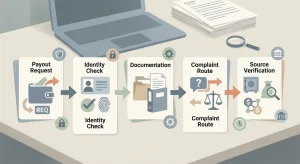
An MGA authorisation covers Malta’s regulatory system, while serving customers in Great Britain requires a separate UKGC licence.
What an MGA Licence Does—and Does Not—Authorise in Great Britain
A Malta Gaming Authority (MGA) licence and a UK Gambling Commission (UKGC) licence are separate regulatory permissions. An MGA licence relates to the operator’s authorisation under Malta’s regulatory system. It does not, by itself, authorise the operator to provide remote gambling facilities to customers in Great Britain.
The relevant test for a Malta-licensed online casino is therefore not simply whether it holds a Malta licence. Operators providing remote gambling facilities to consumers in Great Britain must also hold a UKGC licence, regardless of where the operator is physically based. A company’s location in Malta, or its authorisation there, does not replace that requirement.
This distinction applies to the different ways the same idea may be described: an online casino licensed in Malta, a casino with a Malta licence, or a Malta-licensed casino. Those descriptions refer to an MGA authorisation, not to permission to serve the British market. The licences come from different regulators and have different roles. One should not be treated as a substitute for the other.
For a UK-facing search about Malta MGA-licensed casinos, check an operator’s licensing and UK availability directly before signing up. The details here provide one specific point to consider: the stated payout speed.
1. NightLuck
Payout speed: 1-3 business days NightLuck’s stated payout speed is 1–3 business days. That is the only operator-specific detail provided here.
2. Jetsetspins
Payout speed: 1-3 business days Jetsetspins lists a payout speed of 1–3 business days. No other operator-specific details are provided.
3. SpinFormula
Payout speed: 1-3 business days SpinFormula’s stated payout speed is 1–3 business days. This is the only specific detail available for this reference.
4. Revery Play
Payout speed: 1-3 business days Revery Play lists a payout speed of 1–3 business days. No further operator-specific information is available here.
5. WinBeast
Payout speed: 1-3 business days WinBeast’s stated payout speed is 1–3 business days. No other specific attributes are provided.
6. x3bet
Payout speed: 1-3 business days x3bet lists a payout speed of 1–3 business days. That is the only specific detail provided about the operator.
7. SlotoSport
Payout speed: 1-3 business days SlotoSport’s stated payout speed is 1–3 business days. No additional operator-specific details are available.
8. BeOnBet
Payout speed: 1-3 business days BeOnBet lists a payout speed of 1–3 business days. This reference includes no other specific details about it.
9. Zombillion
Payout speed: 1-3 business days Zombillion’s stated payout speed is 1–3 business days. No further operator-specific information is provided here.
10. NightWin
Payout speed: 1-3 business days NightWin lists a payout speed of 1–3 business days. That is the only specific operator detail available.
What the Malta licence establishes
An MGA licence indicates that the operator has authorisation from Malta’s gambling regulator for the activities covered by that licence. It is meaningful within that regulatory context, but its existence does not determine whether the operator may offer gambling to customers in Great Britain. That question depends on the separate UKGC requirement.
The distinction matters because a licence is not a general certificate that confers permission in every country where a website can be accessed. Regulatory authorisation is tied to the relevant regulator and market rules. A Malta casino licence may establish a connection to Malta’s regulatory framework; it does not extend the MGA’s authority into the British licensing system.
Nor does a Malta licence constitute an endorsement by the UKGC. The UKGC does not approve licences issued by offshore regulators, has no reciprocal licensing agreements with them, and does not handle complaints about operators licensed outside the UK. An MGA authorisation should therefore not be read as evidence that the UK regulator has assessed or accepted the operator for the British market.
Non-UK Licence Casinos: What Licensing Means
This is a regulatory distinction, not a judgement that every Malta-licensed operator is identical or that an MGA licence has no significance. It means only that the licence answers a different question from the one posed by British market access. Whether an operator holds a Malta authorisation and whether it holds the required UKGC licence are separate matters.
Player-fund arrangements are not market permission
MGA licensees are required to keep player funds in segregated accounts at an approved financial institution. That is a feature of the MGA framework concerning the handling of customer money. It does not convert an MGA licence into a UKGC licence, or establish that the operator is authorised to serve Great Britain.
Consequently, a statement about segregated funds should be interpreted within its proper scope. It may describe an obligation attached to the operator’s MGA authorisation, but it does not settle the operator’s status under British rules. The two points—how funds are handled under one regulator’s requirements and whether the operator has permission to serve a particular market—should not be conflated.
Non-Gamban casinos in the UK: what exclusion means
The same care applies to wording such as “MGA-regulated” or “licensed in Malta”. Such wording identifies a regulatory relationship, but alone it does not answer whether the separate UKGC requirement has been met. The presence of a Malta licence cannot be used as a shortcut for that question.
For Great Britain, the central distinction is clear: an MGA licence is not a UKGC licence. A Malta-licensed online casino may have authorisation in Malta, but that authorisation alone does not permit it to provide remote gambling facilities to consumers in Great Britain. Only the separate UKGC requirement addresses that permission.
The UK Gambling Commission’s Role and the Limits of Its Jurisdiction
The UK Gambling Commission (UKGC) is the gambling regulator for Great Britain: England, Scotland and Wales. Its remit is defined by the legal and regulatory arrangements that apply in those parts of the UK. The term “UK” can therefore be misleading when used as shorthand for the Commission’s geographic scope.
Northern Ireland is not covered by the Gambling Act 2005 in the same way as Great Britain. It has a separate regulatory framework, and remote gambling there does not fall under UKGC oversight on the same basis. The Commission’s role should consequently be described in terms of Great Britain rather than assumed to extend uniformly across all four nations.
Jurisdiction Limits
The UK Gambling Commission (UKGC) regulates England, Scotland, and Wales, but Northern Ireland operates under a separate regulatory framework.
This distinction matters when considering Malta Gaming Authority casinos. The MGA and the UKGC are separate regulators operating within different jurisdictions. A Malta-related licence or regulatory status concerns the MGA’s remit; it does not change the geographic boundaries of the UKGC’s authority. Conversely, the UKGC’s oversight of Great Britain does not make it the regulator of Malta-based gambling activity as such.
Searches for an MGA casino list, licensed online casinos or a Malta online casino licence often combine questions about the regulator with questions about where a site operates. Those are not interchangeable. The regulator named in a licence claim indicates which authority is being invoked, while the location of customers and the applicable jurisdiction determine which regulatory framework is relevant. A Malta connection alone therefore says nothing about the UKGC’s institutional remit.
The same distinction applies to promotional descriptions, including offers associated with free spins or no-deposit play, and to payment references such as MiFinity. These features do not alter which regulator has authority in a given territory. They should not be treated as evidence that the UKGC oversees an operator, nor as an indication that the Commission’s jurisdiction extends into Northern Ireland or Malta.
The key geographic boundary is between Great Britain, where the UKGC licenses and oversees gambling, and Northern Ireland, whose regulatory arrangements differ. Malta’s regulator belongs to a separate national framework. Keeping these institutional and territorial scopes distinct makes it possible to interpret references to UKGC and MGA oversight without treating either authority as responsible for the other’s jurisdiction.
Online slots not on GamStop: UK coverage explained
How to Assess Claims About Malta-Licensed Casino Sites
A casino’s statement that it holds a Malta Gaming Authority (MGA) licence is a claim about its regulatory status, not proof that it is authorised to serve customers in Great Britain. Malta’s connection to an operator—whether through its licence, registered business or stated location—does not establish that the operator holds the separate UKGC licence required for remote gambling offered to people in Great Britain.
Verification should begin with the identity of the business behind the site. A brand name displayed on a homepage may not be the legal name of the operator, and a licence claim may refer to a different company within a group. The operator’s terms and licensing information should therefore be read together: the stated legal entity, the regulator and the scope of the claim need to align. If details are unclear or inconsistent, the claim remains unconfirmed.
The next step is to consult the relevant regulator’s own licensing information rather than relying solely on a casino’s badge, promotional wording or customer-support response. An MGA claim should be checked against information published by the Malta Gaming Authority. Separately, the UKGC’s licensing information is the relevant reference for whether an operator is authorised to provide remote gambling facilities to consumers in Great Britain. A Malta licence cannot substitute for that authorisation. The requirement applies to the operator serving the market even when its business is physically based elsewhere.
This distinction matters when assessing Malta online casino sites that advertise themselves to a British audience. A page may use British currency, mention customers in Great Britain or display Malta branding, but those features do not establish UKGC authorisation. Nor does an MGA badge, by itself, show that the UKGC has approved the site. The regulatory claim must be assessed against the regulator and market it concerns.
Verifying Licensing
Identify the Business
Check the operator’s terms to find the legal entity name, as it may differ from the brand name.
Check MGA Status
Verify the claim of a Malta Gaming Authority licence using information published by the MGA.
Confirm UKGC Authorization
Consult the UK Gambling Commission’s licensing information to see if the operator is authorized to serve Great Britain.
The same care applies to claims about games. UKGC licensees are required to use games that have been tested and certified by approved testing houses. That requirement is relevant to operators holding a UKGC licence; it should not be inferred merely from a site’s Malta affiliation or from a general statement that its games are tested. Where a site makes a specific assurance, its wording should be distinguished from evidence that the relevant UK requirement applies.
Bonus pages and descriptions of Malta online slots can provide further clues about how a site presents its services, but they do not establish licensing status. A Malta casino bonus, for instance, is a promotional offer, not a regulatory credential. The same principle applies to claims that a site is among the best or top Malta casino sites: ranking language cannot confirm the operator’s identity, licence or authority to serve Great Britain.
A careful assessment therefore separates three questions: which company operates the site, what licence that company claims to hold, and whether it has the UKGC authorisation needed to serve consumers in Great Britain. Evidence for one does not answer the others. When the operator’s identity or regulatory status cannot be matched to reliable regulator information, the claim should not be treated as established.
Comparing Casino Options Without Treating an MGA Licence as a UK Endorsement
A comparison of Malta-linked casino options for people in Great Britain needs to distinguish two different questions: whether an operator has an MGA connection, and whether it is authorised to provide remote gambling locally. The first does not answer the second. For real-money gambling offered to customers in England, Scotland and Wales, a UKGC licence is the relevant baseline. A Malta-based identity or MGA licence cannot substitute for it.
Gibraltar Casino Licence UK: Rules and Protections
This changes what “best” can reasonably mean. A ranking based on an MGA licence alone would compare operators under a criterion that does not establish their authority to serve the British market. Nor does the phrase “MGA casinos” describe a single, consistent level of suitability for British customers. It may refer to different businesses, products and terms, while leaving the local authorisation question unanswered. An MGA licence may be relevant to understanding an operator’s regulatory background, but it should not be treated as a UK endorsement.
A more defensible comparison begins with eligibility for inclusion. Operators without a UKGC licence should not be presented as UK-facing recommendations for real-money play. This is not a judgement that every such business is identical; it is a limit on what a comparison for the British market can responsibly endorse. Once that threshold is applied, other differences can be considered without confusing regulatory status with product preference.
Compare evidence, not labels
A licence label is not a complete measure of the experience or protections associated with a casino. A comparison should state clearly what it is assessing and avoid turning one regulatory fact into a broad quality claim. For instance, a Malta connection does not, by itself, establish that an operator is suitable for British customers, while a UKGC licence is a necessary basis for a real-money offer in Great Britain rather than proof that every feature is equally attractive.
Do
- Use UKGC licensing as the baseline for real-money play
- Describe concrete features like the approved ADR route
- Rely on specific published bonus conditions
Don’t
- Treat an MGA licence as a UK endorsement
- Infer quality from a “trusted” or “best” label
- Assume a Malta association guarantees UK availability
Complaint handling provides a more specific point of comparison. UKGC licensees must work with an approved Alternative Dispute Resolution provider for player complaints. Under that route, a complaint is first taken to the operator’s ADR provider; if it remains unresolved, it can then be escalated to the Gambling Commission. This gives a comparison a concrete, relevant feature to describe: whether the operator’s complaint process fits that framework. It does not justify claims that complaints will be resolved in a particular way or within a particular time.
Other comparison categories should be presented as matters to examine, not as protections that can be assumed from a licence label. Bonus conditions, available games, payment arrangements and account features may differ between operators. Unless the details are established for the particular offer or service, a comparison should not infer them from an MGA licence or describe them as standard across Malta-linked casinos. The same restraint applies to terms such as “trusted”, “safe” or “best”: without a defined measure and evidence, these are promotional conclusions rather than useful comparisons.
Why broad rankings can mislead
Lists of the “best” Malta casinos often imply that the options have been assessed on a common basis. That implication is weak if the ranking does not explain its criteria, distinguish local authorisation from foreign licensing, and support its judgements with information about the specific operators. A position in a list cannot itself establish that an operator may offer real-money gambling in Great Britain.
Anjouan casino licence in the UK: what it means
The word “best” also depends on what is being measured. A player interested in game selection may value different features from someone comparing complaint routes or promotional terms. Without a disclosed method, a single ranking can obscure those differences and make an unverified recommendation appear more conclusive than it is. A useful comparison therefore separates factual attributes from editorial preference, explains the scope of the assessment, and avoids ranking operators that do not meet the local authorisation threshold.
The same principle applies to bonus comparisons. A Malta association is not evidence that a bonus is available to British customers, nor does it establish the full terms attached to an offer. A comparison should rely on the specific published conditions and should not imply that an attractive headline amount makes an operator appropriate for the British market. Promotional value and permission to serve customers are separate issues.
Accordingly, an MGA casino list is not, on its own, a meaningful shortlist for Great Britain. For a comparison intended for this market, UKGC authorisation is the entry condition; documented features such as the approved ADR route can then be described within their proper limits. Where an operator’s status or terms are not established, the comparison should not fill the gap with a ranking or recommendation.
Real-Money Play and the UK Licence Requirement
A Malta connection and permission to accept real-money play in Great Britain are separate matters. A casino may be based in Malta or hold an operating licence from the Malta Gaming Authority, but that status does not by itself authorise it to offer gambling to customers in England, Scotland or Wales. For those customers, the relevant requirement is a UKGC licence.
Illegal Operation
Offering gambling services to consumers in Great Britain without a UKGC licence is illegal for the operator, regardless of any MGA licence held.
The rule applies to the service being provided, not simply to the operator’s address. An online casino that accepts real-money play from customers in Great Britain must hold a UKGC licence even if its business is run from Malta or another country. An MGA licence therefore cannot be treated as a substitute for the British authorisation. This distinction matters when a site describes itself as a Malta online casino: the geographic label may say something about its base, but not whether it is permitted to serve the British market.
Offering gambling services to UK consumers without a UKGC licence is illegal for the operator. A Malta licence does not change that position. As a result, the relevant question for real-money play in Great Britain is not whether a site has some form of overseas regulatory status, but whether the operator holds the UKGC licence required for that activity. The label “MGA casino” alone does not answer that question.
The distinction also affects what can be inferred about customer money. UKGC licensees must keep player funds separate from the funds used to run the business. This segregation is intended to protect customer money if the casino becomes insolvent. It is a specific safeguard attached to UKGC licensing; it should not be assumed to apply to a Malta-licensed operation merely because that operation holds an MGA licence.
Segregation is relevant to the treatment of balances, but it should not be read as a guarantee that every amount will necessarily be recovered in every insolvency. Its practical significance is that player funds are not meant to be mixed with ordinary operating money under the UKGC requirement. That protection is part of the regulatory framework for a UKGC-licensed operator, rather than a general consequence of a casino being based in Malta.
Curacao Casino Licence in the UK: What It Means
For anyone comparing Malta casinos online, these distinctions prevent two different claims from being conflated. A licence from Malta concerns the operator’s regulatory position in that jurisdiction; a UKGC licence is required for real-money gambling offered to customers in Great Britain. The presence of the former does not establish the latter, and the customer-fund protection required of UKGC licensees cannot be inferred from Malta branding alone. In this context, “online casino Malta” describes a possible location or licensing connection, not a separate route to authorisation for British real-money play.
UK Players, Geographic Eligibility and Age Checks
“UK players” is a broad phrase, but eligibility for offers governed by Great Britain’s gambling rules turns on specific conditions. For a no-deposit offer, the relevant location condition is physical presence in Great Britain. A person’s nationality, home address or connection to Malta does not establish that they meet this condition at the time they claim the offer.
This distinction matters for people who move between countries or travel. A customer who lives in Great Britain but is elsewhere when attempting to claim a no-deposit promotion is not physically in the required location. Conversely, the condition concerns where the person is when claiming, not whether they hold British citizenship. The offer’s description should therefore be read in light of the location requirement, rather than treated as available to anyone described broadly as a UK player.
The phrase “Malta casino for UK players” can also obscure a separate question: whether a particular site accepts customers located in Great Britain at all. A Malta connection, or an MGA licence, does not itself establish that a site is eligible to provide gambling services there. Nor does the existence of a free-play or no-deposit promotion show that it can be claimed by someone in Great Britain. These are distinct matters: the site’s authority to serve the market and the customer’s eligibility for a particular offer should not be conflated.
Eligibility Check
- Verify that the operator holds a UKGC licence
- Confirm physical presence in Great Britain
- Ensure age verification is completed (18+)
Age is another condition that applies before gambling begins. The Gambling Commission requires operators to establish that a customer is at least 18 before permitting a deposit or play. Age verification is therefore not merely a later check triggered by a withdrawal request. A site’s promotional language does not displace the requirement, and an account cannot be treated as eligible for play until the operator has verified the customer’s age.
For someone considering a no-deposit offer, the practical sequence is consequently limited but clear: the operator must verify that the customer is an adult before deposit or play, and the customer must be physically in Great Britain to claim that type of offer. Meeting those conditions does not, by itself, establish that every other eligibility condition has been met, or that a Malta-licensed site is authorised to serve Great Britain. It also does not mean that every promotion is available to every adult in the country.
Searches for Malta online casinos accepting UK players often combine location, age and site availability into a single idea. They should be treated separately. “UK” may be used informally to describe the audience, while the stated location condition is specifically Great Britain. A claim that an offer is for UK customers cannot change that condition. Equally, being physically present in Great Britain and old enough to play does not prove that a particular Malta-linked operator accepts the customer. Eligibility depends on the applicable conditions, not on the wording of a promotional label.
GamStop and Casinos Outside the UK Self-Exclusion Scheme
GAMSTOP participation is linked to UKGC licensing, not to whether an operator is based in Malta or holds an MGA licence. The UK Gambling Commission requires every operator it licenses to take part in the national self-exclusion scheme. As a result, a Malta connection alone cannot establish that a casino is included in GAMSTOP.
Casino Without a Swedish Licence: UK Guide
GAMSTOP enables a person to exclude themselves from all UKGC-licensed gambling sites for a selected period: six months, one year or five years. The exclusion applies across participating sites rather than being limited to one casino. This makes the scheme materially different from a self-exclusion arrangement set up with an individual operator, which does not by itself establish that other gambling sites are covered.
The distinction is important when considering Malta casinos described as “not on GamStop”. A Malta-based business, or one authorised by the Malta Gaming Authority, may sit outside the UKGC system. Non-UKGC licensed casinos do not participate in the UK’s national scheme. Their customers therefore cannot assume that a GAMSTOP exclusion will block access to those services.
That limitation should not be read as evidence that a non-UKGC site offers an equivalent self-exclusion safeguard. The established point is narrower: GAMSTOP covers UKGC-licensed gambling sites, while operators outside that licensing system are not part of the scheme. Whether an individual non-UKGC operator has its own exclusion tools is a separate matter and does not make it a GAMSTOP participant.
The same distinction applies to searches for MGA casinos outside GAMSTOP or Malta online casinos without GAMSTOP. These descriptions refer to a possible regulatory position, not to a verified list of sites. A Malta licence does not itself show whether an operator is licensed by the UKGC, and a claim that a site is outside GAMSTOP should not be treated as confirmation of its regulatory status. The scheme’s coverage follows UKGC participation, not a label such as “MGA casino”.
GAMSTOP Limitation
GAMSTOP only blocks access to UKGC-licensed sites; it does not automatically exclude a user from casinos licensed only by the MGA.
For someone who has registered with GAMSTOP, the practical scope is therefore specific: the exclusion applies to UKGC-licensed sites, not to every gambling service available online. A site outside the scheme should not be assumed to recognise or enforce the exclusion. Nor does the absence of GAMSTOP participation establish that a site is safe, suitable or authorised to serve customers in Great Britain.
This matters because self-exclusion is intended to create a barrier across participating operators. Treating a Malta licence as interchangeable with UKGC licensing can obscure where that barrier applies. The relevant distinction is not simply between Malta and the UK; it is between sites covered by the UKGC’s mandatory GAMSTOP participation and those outside that system. A Malta-linked operator’s location or MGA status does not, by itself, answer which category applies.
Bonus Terms, Wagering and UK Promotion Limits
A Malta casino bonus is not defined by its headline value alone. Wagering requirements determine how much qualifying play is needed before bonus funds can become withdrawable, while game-contribution rules affect how quickly that requirement is met. The terms therefore matter more to the bonus’s practical value than its advertised amount.
A specialist review gives a clear illustration of the arithmetic: a £20 bonus with a 35x wagering requirement would require £700 in qualifying bets before conversion to withdrawable cash. That calculation describes how a wagering multiple works; it should not be read as an acceptable UK promotion. UK promotion rules cap wagering requirements at 10x, so an offer above that limit would not meet the stated UK standard.
Non-GAMSTOP Curaçao Casino Sites: What Claims Mean
Contribution rates can make the required play differ by game. Slots commonly count each pound wagered in full towards the requirement, whereas table games may count only a fraction, such as 10% or 20%; some table games contribute nothing. A player wagering the same total amount can therefore make very different progress depending on the games included in the promotion. The specific offer terms determine which games qualify and their contribution rates.
This distinction also applies to an MGA casino bonus or an online casino bonus advertised in Malta. The label does not establish the applicable promotion rules for a customer in Great Britain. Bonus wording should be assessed against the conditions attached to the offer, including its qualifying games, contribution rates and withdrawal rules, rather than inferred from the operator’s location or licensing description.
A no-deposit bonus does not remove the need to read those conditions. The absence of an initial payment says nothing by itself about how bonus funds are converted or whether particular games count towards wagering. Similarly, a bonus promoted by a Bitcoin casino in Malta should not be assumed to follow different wagering mechanics simply because of the payment method.
The useful comparison is therefore between the actual terms and the value they allow a customer to realise. A large headline bonus can involve limited game eligibility or low contribution rates, while a smaller offer may impose fewer qualifying conditions. Neither the Malta connection nor the word “bonus” establishes that the promotion is suitable for the British market.
Bonus Wagering Example
A £20 bonus with a 35x wagering requirement requires £700 in qualifying bets before it can be converted to withdrawable cash. Note that UK promotion rules typically cap wagering requirements at 10x.
New Malta Casino Sites: What Can Be Verified Before Use
A newly launched casino may present itself as Malta-based or describe an MGA licence as evidence of regulatory oversight. Neither point, by itself, establishes that the site is authorised to provide remote gambling to customers in Great Britain. Operators serving that market must hold a UKGC licence, whatever their physical location. Offering gambling services to UK consumers without one is illegal for the operator.
The distinction matters particularly for new entrants. A launch announcement, a new domain or an operator’s description of its regulatory status does not establish that it holds the permission required for the British market. Nor does a Malta connection fill that gap. A site can be new, Malta-licensed and still not be authorised to serve customers in Great Britain.
Claims should therefore be separated into distinct questions: when the service began operating, which entity runs it, what licence that entity holds, and whether it has a UKGC licence for the relevant activity. These are not interchangeable details. A site’s branding may differ from the name of its operating company, so the stated identity should be clear enough to compare with the relevant regulatory information. Where the operator or licence details are ambiguous, the uncertainty remains; a polished launch page cannot resolve it.
Newness also limits what can be established about a site’s record. A short period of operation provides less history on which to assess how the company handles complaints, payments or account issues. That absence is not proof of misconduct, but it does mean that claims about reliability cannot be inferred from the site’s appearance or from its recent launch. Equally, a Malta licence should not be treated as a UK endorsement.
For a casino described as a new MGA-licensed site, the decisive issue for British customers is not whether the launch is recent or whether the MGA claim sounds credible. It is whether the operator holds a UKGC licence to provide the service in Great Britain. If that authorisation cannot be established, the site should not be treated as a legal option for real-money gambling in this market. These checks do not require a list of new Malta casinos: they apply to any entrant making claims about serving British customers, regardless of its launch date or payment branding.
Non-UKGC Licensed Casinos: Rules and Risks
Malta-Based Casinos, Payment Claims and UK Restrictions
A casino described as Malta-based may have an operator, office or licensing connection in Malta, but that description does not establish where its customers may legally be served. Physical location and permission to provide gambling facilities are separate matters. An operator serving consumers in Great Britain must hold a UK Gambling Commission licence, irrespective of where it is based. The label “Malta-based online casino” therefore cannot, by itself, establish that the site is authorised to accept customers in England, Scotland or Wales.
The same distinction applies to payment claims. A page referring to Paysafecard or Mastercard does not demonstrate that a particular payment method is available to a specific customer, or that the operator is authorised to serve Great Britain. Payment logos and checkout options are claims about a site’s services, not evidence of its regulatory status. Mastercard may refer to different card products, so the brand name alone does not clarify whether a transaction involves a credit card.
Credit cards cannot be used for gambling at UK-licensed casinos. This restriction concerns credit-card gambling; it should not be read as evidence that every card bearing a particular network’s name is a credit card, or that every other payment method is permitted in every circumstance. Claims about Paysafecard availability likewise need to be treated as operator-specific rather than as a general feature of Malta-based casinos.
There may be commercial or administrative reasons for an operator to locate in Malta, but location alone does not establish the reason for a particular business’s choice. Nor does it alter the requirement that remote gambling facilities offered to consumers in Great Britain be covered by the relevant UK operating licence. The practical distinction is between where a business is based and whether it holds authority to serve the British market; payment branding resolves neither question.
Can I still play at non-UKGC casinos if I’m based in the UK?
If you’re in Great Britain, a casino without a UKGC licence is not authorised to offer you remote gambling, regardless of its Malta or other offshore licence. Offshore casinos also do not participate in GamStop.
Are offshore casinos legal for UK players?
In Great Britain, operators must hold a UKGC licence to offer gambling to consumers; an offshore licence alone does not authorise them to do so. Northern Ireland has a separate regulatory framework.
What tools do UK operators have to provide?
UKGC-licensed operators must provide tools including deposit and loss limits, session limits, time-outs, self-exclusion and reality checks. They must also participate in GamStop.
Material created by the team NationalBet Casino UK